




This practical guide explains how to choose the right MPPT inverter size by analyzing load demand, solar array ratios, MPPT voltage range, and battery compatibility for efficient, reliable solar systems.
How to Choose the Right MPPT Inverter Size (2025 Practical Guide)
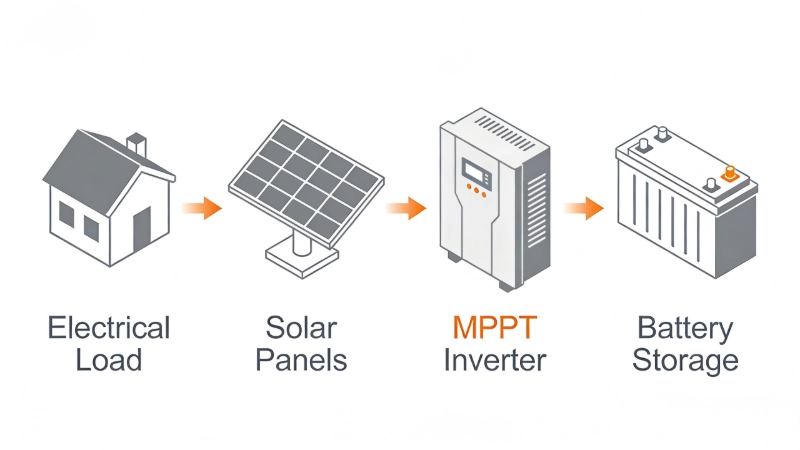
Choosing the correct MPPT inverter size is one of the most critical decisions in any solar and energy storage system. A poorly sized inverter can reduce efficiency, limit solar output, or even shorten battery lifespan. This guide is written for homeowners, installers, and system designers who want a clear, practical method to size an MPPT inverter correctly—without guesswork.
Looking for controller comparison?
Read our detailed analysis:PWM vs MPPT – Which Is Right for Your System? (2025)
1. Why MPPT Inverter Size Matters More Than You Think
Many system issues are not caused by poor components, but by incorrect sizing. An undersized inverter clips solar power, while an oversized inverter increases cost without meaningful gains.
- Limits usable solar energy
- Reduces battery charging efficiency
- Creates long-term reliability issues
MPPT technology only works optimally when the inverter size matches the system design.
2. Step One: Calculate Your Real Load Demand
Start with actual power consumption, not panel size. List all critical loads and their rated wattage.
For example, a system with air conditioners, pumps, and refrigerators may briefly exceed its average power demand several times a day.
3. Matching Solar Array Power to Inverter Capacity
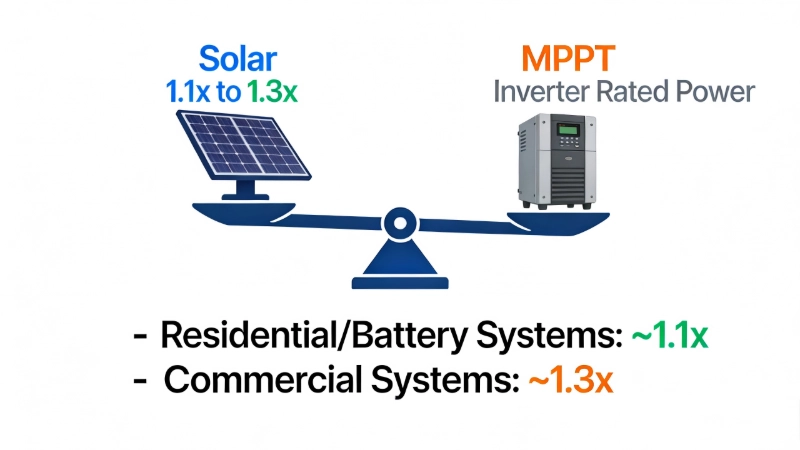
Most MPPT inverters allow some level of solar oversizing. A common and safe design ratio is:
- Solar array: 1.1× to 1.3× inverter rated power
- Battery systems: stay closer to 1.1× for stability
4. Understanding MPPT Voltage Range (Critical but Often Ignored)
Each MPPT inverter has a defined operating voltage window. If your panel string voltage falls outside this range, efficiency drops—or the system fails to start.
Always verify:
- Minimum MPPT startup voltage
- Maximum MPPT operating voltage
- Cold-weather voltage increase margin
This step alone prevents many real-world installation failures.
5. How Many MPPT Channels Do You Actually Need?
Multiple MPPT inputs allow independent optimization of different panel strings.
| System Type | Recommended MPPTs |
|---|---|
| Single roof direction | 1 MPPT |
| East–West rooftop | 2 MPPTs |
| Complex shading or commercial | 3+ MPPTs |
6. Battery Voltage and Inverter Compatibility
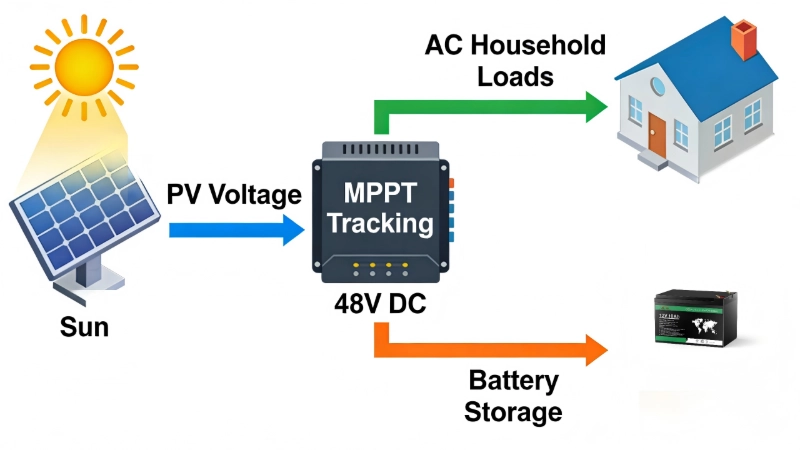
Battery voltage must match the inverter's DC input design. For modern systems using LiFePO4 batteries, common configurations include:
- 48V systems for residential and telecom
- High-voltage battery banks for commercial ESS
Incorrect voltage matching leads to energy loss and higher system stress.
7. Common MPPT Inverter Sizing Mistakes
- Sizing based only on panel wattage
- Ignoring MPPT voltage limits
- Underestimating peak load
- Choosing too few MPPT channels
Most of these mistakes are avoidable with proper planning.
8. Final Checklist Before Choosing an MPPT Inverter
- ✔ Peak load calculated
- ✔ Solar-to-inverter ratio verified
- ✔ MPPT voltage range checked
- ✔ Battery voltage matched
- ✔ Future expansion considered
Conclusion
Choosing the right MPPT inverter size is not about buying the biggest unit available. It is about balancing efficiency, reliability, and cost.
A properly sized MPPT inverter maximizes solar harvest, protects batteries, and ensures long-term system performance—especially in hybrid and ESS applications.
FAQ
Q1: Can I oversize my MPPT inverter for safety?
A1: Slight oversizing is acceptable (1.1x–1.3x), but too much increases cost and can reduce efficiency.
Q2: How many MPPT channels do I really need?
A2: It depends on your roof layout and shading. Usually 1–3 MPPT channels suffice.
Q3: Does battery voltage matter?
A3: Yes, the battery voltage must match the inverter's DC input. Mismatch leads to energy loss and system stress.
Need Professional Sizing Assistance?
Our experts can help you select the perfect MPPT inverter for your specific system requirements.
Get Expert Advice →